
Learning golf can feel confusing when every swing produces a different result. A clean strike may appear beside a heavy chunk. That is normal. The R&A’s Golf Around the World 2023 report recorded 66.6 million on-course golfers across 206 countries. This growing participation makes practical, trustworthy golf lessons increasingly valuable for new players.
The National Golf Foundation reported that 41.1 million Americans played golf on a course in 2023. Many beginners still struggle with grip pressure, alignment, distance control, and rushed practice. These details matter more than buying expensive equipment. Ben Hogan, one of golf’s most influential players and instructors, offered a useful principle: “The most important shot in golf is the next one.” His idea supports a calm, skill-based learning process.
This guide introduces ten essential golf lessons for beginners. It covers posture, grip, ball position, the basic swing, putting, chipping, pitching, bunker play, club selection, and practice habits. Each topic connects technique with a visible course situation, such as a three-foot putt or a buried bunker lie. The list cannot fix every swing overnight. It should not pretend to. Beginners need feedback, repetition, and occasional correction from a qualified PGA professional. Some advice may feel uncomfortable at first. That discomfort can reveal a useful weakness. With patient practice and reliable instruction, new golfers can build better contact, smarter decisions, and greater confidence one shot at a time.
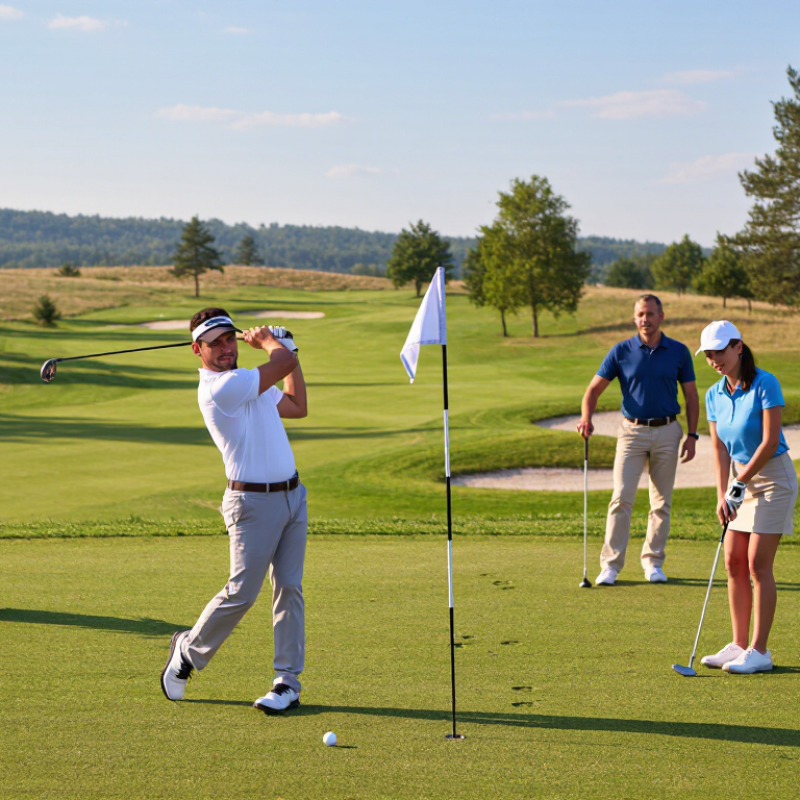
For a beginner, three of the top ten golf lessons begin before the club moves. In my coaching experience, a neutral grip creates a predictable clubface position. Place the handle across the fingers of your lead hand, not deep in the palm. Wrap your other hand around it, with both thumbs pointing slightly toward your trail shoulder. Hold firmly enough for control, but softly enough for flexible wrists. Pressure around four out of ten works well.
Stance affects balance and contact. Set your feet about shoulder-width apart for a middle iron. Let your toes point slightly outward. Bend from your hips, then soften your knees. Keep your weight centered over the balls of your feet. Your arms should hang naturally, not reach for the ball. I often place a club on the ground to check alignment. Your feet, hips, and shoulders should aim parallel to the target line.
Posture is not a frozen pose. It changes with the club and shot. A longer club needs a wider stance and a taller setup. A shorter club needs less width. My early posture was too rigid, and I lost balance during the finish. That mistake still teaches me something. Make slow practice swings, pause at address, and notice tension in your hands or neck. Film one swing from behind. Small adjustments become visible.
| No. | Beginner Lesson | Core Technique | Practical Guidance | Suggested Practice | Common Mistake to Avoid |
|---|---|---|---|---|---|
| 1 | Build a Neutral Grip | Place the handle diagonally across the lead hand, then connect the hands comfortably without excessive tension. | The grip should feel secure but relaxed. The palms should not squeeze the club tightly. | Make 20 slow grip checks before hitting short shots. | Holding the club mainly in the palms or gripping too firmly. |
| 2 | Establish Proper Stance Width | Set the feet about shoulder-width apart for a middle iron and adjust slightly for different club lengths. | A balanced stance allows the body to rotate while keeping the feet stable. | Practice setting up with a club laid across the toes for alignment feedback. | Standing too narrowly, too widely, or changing stance width randomly. |
| 3 | Learn Athletic Posture | Bend from the hips, keep the spine relatively straight, soften the knees, and let the arms hang naturally. | The nose should be roughly over the toes, with the weight balanced between the feet. | Hold the setup position for 10 seconds, repeating it 10 times without a club. | Rounding the back or bending mainly from the knees. |
| 4 | Align the Body and Clubface | Aim the clubface at the target first, then align the feet, knees, hips, and shoulders parallel to the target line. | The body line is usually parallel to the target, not pointed directly at it. | Use alignment sticks or two clubs on the ground during 10 setup repetitions. | Aiming the shoulders left or right while focusing only on the target. |
| 5 | Understand Ball Position | Use a central position for many short and middle-iron shots; move the ball gradually forward for longer clubs. | Ball position affects the lowest point of the swing and the angle of contact. | Hit five shots each from center, slightly forward, and slightly back to compare contact. | Placing every club in the same ball position. |
| 6 | Control the Short Putting Stroke | Keep the shoulders moving the putter while minimizing unnecessary hand action. | Distance control is more important than hitting the ball hard. | Roll 10 balls toward a target from 3 to 6 feet, focusing on pace. | Using a quick wrist flick or looking up before impact. |
| 7 | Develop a Reliable Chipping Motion | Use a narrow stance, modest backswing, and a controlled follow-through with the ball positioned slightly back of center. | Choose a landing spot first and allow the ball to roll toward the target. | Play three landing-point exercises from short grass, using different carry distances. | Trying to lift the ball by scooping it with the hands. |
| 8 | Make a Balanced Half Swing | Swing the club to a comfortable half length while maintaining rhythm, balance, and centered contact. | A shorter controlled motion is useful for learning contact before adding speed. | Hit 30 half shots with a short or middle iron, holding the finish briefly. | Overswinging and losing balance in an attempt to create distance. |
| 9 | Create a Consistent Tempo | Use a smooth transition from backswing to downswing rather than trying to accelerate abruptly from the top. | Consistent timing improves repeatability and helps reduce tension. | Practice a quiet count such as “one-two” for backswing and downswing. | Rushing the downswing or stopping between the backswing and forward swing. |
| 10 | Finish in Balance and Review Contact | Complete the motion with the chest turning toward the target and most weight supported on the lead side. | A balanced finish is a useful checkpoint, but solid contact and direction remain the main goals. | After each practice set, record strike quality, starting direction, and balance on a simple score sheet. | Focusing only on distance while ignoring contact, direction, and repeatability. |





The Presidio Golf Course is
a Presidio Trust Initiative.