What Are the Top Promotional Items for 2026?
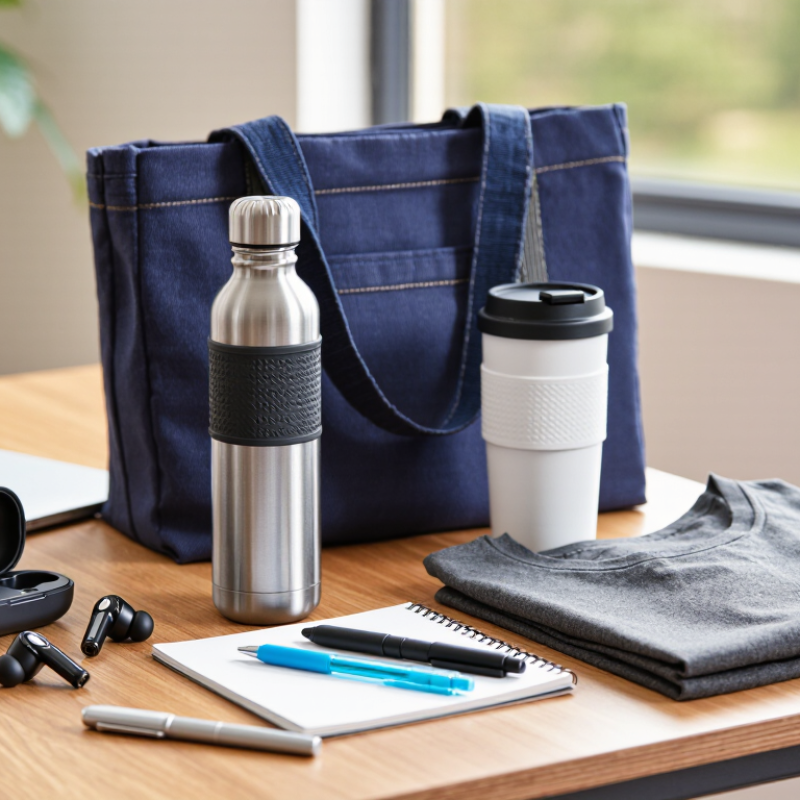
What are the top promotional items for 2026? The answer will not rest on novelty alone. It will depend on usefulness, responsible sourcing, and measurable brand value. PPAI’s 2024 Promotional Products Sales Volume Study reported U.S. industry sales of $26.6 billion in 2023, showing continued demand despite economic pressure. The report also indicates that apparel, drinkware, bags, and writing instruments remain major product categories. These familiar items still work. They appear on office desks, in gym bags, and beside morning coffee.
ASI’s Ad Impressions Study provides another important signal. Promotional products can create repeated brand exposure because recipients keep and use them. That advantage separates them from many short-lived digital advertisements. However, impressions alone do not prove success. A cheap item can become waste, not loyalty.
Mark Graham, founder and CEO of commonsku, has said, “The best promotional products are the ones people actually want to keep.” That principle should guide 2026 planning. Reusable drinkware, practical tech accessories, premium everyday apparel, and responsibly made bags deserve close attention. Personalization may strengthen relevance, but it cannot repair poor quality.
The industry still has gaps. Sustainability claims are not always comparable, and product data can be inconsistent across reports. Buyers should check material details, supplier certifications, durability, and actual usage. A thoughtful promotional items strategy may produce fewer units, but better results. The strongest choices will fit real routines, reflect brand values, and survive beyond the first impression.
What Makes a Promotional Item Effective in 2026?
What makes a promotional item effective in 2026 is simple: people should want to use it after the event ends. The ASI 2023 Ad Impressions Study found that 85% of surveyed consumers remembered the advertiser on a promotional product. It also reported that 81% kept or used an item because it was useful. These figures point to practical value, not novelty, as a strong starting point. A sturdy tote, clear-print notebook, or leak-resistant bottle can earn repeated use. But usefulness depends on the audience. A bottle is less welcome when someone already carries one everywhere.
Good design makes that useful item easy to keep. Choose durable materials, readable artwork, and a size that fits a work bag or desk drawer. Avoid oversized logos that turn an everyday object into an unwanted advertisement. A well-made item can still miss the mark if it solves no real need. That part is easy to overlook.
Tips: Match the item to how recipients work or travel. Check the finish, print, and packaging before ordering in bulk. Ask a small group to test it first; their feedback may be less flattering, and more useful.
Which Promotional Product Categories Are Expected to Lead in 2026?
For 2026, wearable items, drinkware, bags, and useful technology accessories are strong categories to watch. Apparel stands out because a comfortable shirt or lightweight jacket can be worn repeatedly, turning a giveaway into visible, everyday exposure. ASI’s 2023 Ad Impressions Study estimated that promotional outerwear generated about 6,100 impressions over its lifetime. That figure is an industry estimate, not a guarantee; wear frequency and product quality matter.
Drinkware and bags also suit daily routines. A reusable bottle on a desk or a tote carried through a grocery store keeps a message in view without demanding attention. ASI’s study estimated about 1,940 lifetime impressions for promotional bags, suggesting practical items can travel well beyond the original recipient. Tech accessories, such as charging cables and laptop sleeves, may appeal to hybrid workers, though usefulness varies by audience. A drawer full of unused gadgets is not a win.
The best category depends on who receives the item and where they will use it. PPAI’s consumer research has consistently found that recipients value useful promotional products, but usefulness is personal. Choose durable materials, comfortable fits, and clear designs; then check whether the item suits the event, season, and audience. A smaller, well-chosen order can make more sense than a large box of forgettable extras.
How Sustainability and Technology Will Shape Promotional Items
What Are the Top Promotional Items for 2026?
How Sustainability and Technology Will Shape Promotional Items
Promotional items in 2026 will need to earn their place in everyday life. A useful item is more likely to stay on a desk or travel in a bag than end up forgotten in a drawer. Reusable drinkware, recycled-fiber notebooks, and compact charging accessories are practical options. Still, sustainable materials alone do not make a product responsible. Buyers should check durability, repairability, packaging, and clear material information. A recycled notebook that falls apart quickly is not a convincing choice.
Technology can add convenience without making an item feel disposable. Wireless charging pads, cable organizers, and simple tracking features may suit people who work across different locations. Keep the experience straightforward. If setup needs a long instruction sheet, the feature may be more trouble than it is worth. Technology also changes quickly, so selecting products with replaceable parts or broad compatibility can reduce early obsolescence. There is no perfect option, and that deserves a second look.
Tips: Request a sample before ordering. Test the finish, weight, and daily usability. Ask suppliers for specific material details, expected product lifespan, and packaging information. Choose a smaller set of well-made items over a large batch of uncertain quality. When adding a digital feature, explain what data it uses and how recipients can use it safely. Keep the message modest; thoughtful utility matters more than a crowded logo.
How to Choose Promotional Items for Different Target Audiences
Choosing promotional items for 2026 starts with a simple question: who will use them, and where? A useful item fits into someone’s routine instead of becoming clutter. For office teams, consider a sturdy notebook, a comfortable pen, or a cable organizer that stays on a desk. For commuters, a compact tote or insulated bottle may earn more use. Keep size, weight, and care instructions in mind. Small details matter.
Different audiences also have different expectations. Event visitors often value lightweight items they can carry easily, such as a foldable bag or a pocket-sized notepad. Clients may respond better to a durable desk accessory that feels considered, not flashy. For students, practical study supplies can be more relevant than decorative keepsakes. Ask a few intended recipients before ordering. Their feedback may surprise you.
Match the item to the setting and the message. A wellness-focused campaign might offer a simple stretch band, while an outdoor event could call for a reusable rain poncho. Check materials, printing quality, and useful lifespan before committing to a large quantity. A low price can still mean poor value if an item breaks quickly. That happens. I’d also leave room for a small test run; audience preferences are not always obvious, and even careful choices can miss the mark.
How to Measure the Success of a Promotional Product Campaign
Promotional products can attract attention in 2026, but attention alone does not prove success. Reusable desk kits, compact charging accessories, and practical travel items may earn regular use. Their value depends on the audience, offer, and distribution moment. A useful campaign begins with one measurable objective, such as qualified leads, event visits, or repeat purchases.
Track the recipient journey from delivery to action. Use a unique landing page, QR code, or redemption code for each audience segment. Record impressions, scans, conversions, cost per lead, and revenue influenced. A simple spreadsheet can reveal whether 1,000 items generated 120 visits or only 12 meaningful inquiries. Measure again after 30, 60, and 90 days. Some products create delayed value.
Do not rely on impressions alone. Ask recipients whether they remember the item, used it, and connected it with your organization. Compare results with a similar audience that received no product. This control group improves credibility, although it cannot remove every outside influence. In one campaign, a practical item produced many scans but few sales because the landing page was unclear. That result was disappointing, yet useful. Attribution is rarely perfect. Review the data by audience, channel, item cost, and follow-up quality. A product that costs more may still perform better when its use continues beyond the event.
What Are the Top Promotional Items for 2026? - How to Measure the Success of a Promotional Product Campaign
The figures below are illustrative planning targets, not industry-wide benchmarks. Set final targets using your campaign budget, audience, and past results.
| Promotional item | Best-fit campaign objective | Useful success measures | Illustrative planning target | How to measure |
| Reusable drinkware | Brand recall and ongoing visibility | Recall rate; cost per retained item; recipient feedback | At least 70% of surveyed recipients recall receiving it after 30 days | Survey a sample of recipients 2–4 weeks after distribution; include a comparison group where practical. |
| Tote bags | Event reach and repeated public exposure | Distribution rate; usage rate; cost per recipient | At least 60% of recipients report using the item within 30 days | Record units distributed and collect a short follow-up survey asking whether and how often the bag was used. |
| Notebooks and pens | Conference engagement and practical utility | Booth visits; item take-up; qualified follow-ups | Increase qualified booth leads by 10% versus a comparable event | Track item distribution alongside badge scans or lead forms; compare with a similar event or prior-period baseline. |
| Phone stands and charging accessories | Lead generation and product demonstrations | Landing-page visits; qualified leads; cost per lead | Generate at least 5% more qualified leads than the campaign baseline | Use a campaign-specific QR code or URL and connect submissions to the campaign in your analytics or CRM system. |
| Apparel | Community building and team participation | Participation rate; opt-in rate; cost per participant | Reach the participation goal set for the event or program | Compare eligible participants with actual recipients; monitor voluntary event attendance or opt-ins. |
| Seed paper or reusable household items | Sustainability messaging and audience engagement | Engagement rate; message comprehension; recipient satisfaction | At least 80% of surveyed recipients understand the intended campaign message | Use a short post-campaign survey; report material and disposal claims accurately and avoid unsupported environmental claims. |
Core campaign calculations: response rate = responses ÷ recipients; cost per response = total campaign cost ÷ responses; conversion rate = completed desired actions ÷ tracked visits or leads. Define each metric and its measurement period before distribution.