What are Junior Golf Clubs and How to Choose the Right Set for Kids
Choosing the right equipment for young golfers is crucial for their development and enjoyment of the sport. Junior golf clubs are specifically designed to meet the needs of children, taking into consideration their physical dimensions, strength, and skill levels. According to the National Golf Foundation, the number of youth golfers has increased significantly over the past decade, with more than 2.5 million kids aged 6 to 17 actively participating in the sport. This surge in interest emphasizes the importance of equipping young players with appropriate gear that fosters a positive experience and encourages longer-term engagement with the game.
When selecting junior golf clubs, several factors come into play, including shaft length, clubhead size, and grip diameter. Research indicates that clubs tailored to a child's height and strength can improve swing mechanics and instill confidence on the course. Additionally, experts suggest that using lighter clubs enables better control and allows for more effective learning of fundamental skills. As youth golf programs continue to expand, understanding the characteristics that define quality junior golf clubs is essential for parents and coaches aiming to cultivate a lifelong passion for golf in their young athletes.

What are Junior Golf Clubs and Their Purpose for Young Golfers
Junior golf clubs are specifically designed equipment meant to cater to young golfers, taking into account their unique needs, size, and skills. Unlike adult golf clubs, junior clubs are lighter, shorter, and often feature flexible shafts to help children achieve better swings. According to the National Golf Foundation, there has been a noticeable increase of 30% in youth golf participation since 2020, underscoring the growing interest in the sport among younger generations. This rise in participation highlights the importance of providing the right tools for kids to enjoy and succeed in golf, as having the appropriate equipment can significantly impact their development and enjoyment of the game.
When selecting junior golf clubs, factors such as age, height, and skill level should be considered to ensure optimal performance and comfort. Various studies, including those from the US Kids Golf Foundation, emphasize the significance of matching club length and flexibility to a child’s physical attributes. For instance, clubs that are too long or heavy can cause poor swing mechanics and frustration, leading to a decrease in enthusiasm for the sport. Properly fitted clubs not only enhance a child's ability to play but also promote correct techniques from an early age, setting a solid foundation for their future golfing endeavors. Investing in a suitable set of junior clubs can foster a lifelong passion for the game, making it crucial for parents and instructors to prioritize equipment that meets the specific needs of young golfers.
What are Junior Golf Clubs and How to Choose the Right Set for Kids
| Feature |
Description |
Recommended Age |
Length (inches) |
Club Types |
| Driver |
Lightweight club for distance off the tee. |
5-8 years |
36-38 |
1 |
| Irons |
Clubs for accurate shots from the fairway. |
5-10 years |
30-33 |
5 |
| Putter |
Club for short, precise strokes on the green. |
5-12 years |
28-30 |
1 |
| Wedges |
Clubs for short-distance shots and chipping. |
8-12 years |
30-34 |
2 |
Key Features to Look for in Junior Golf Clubs
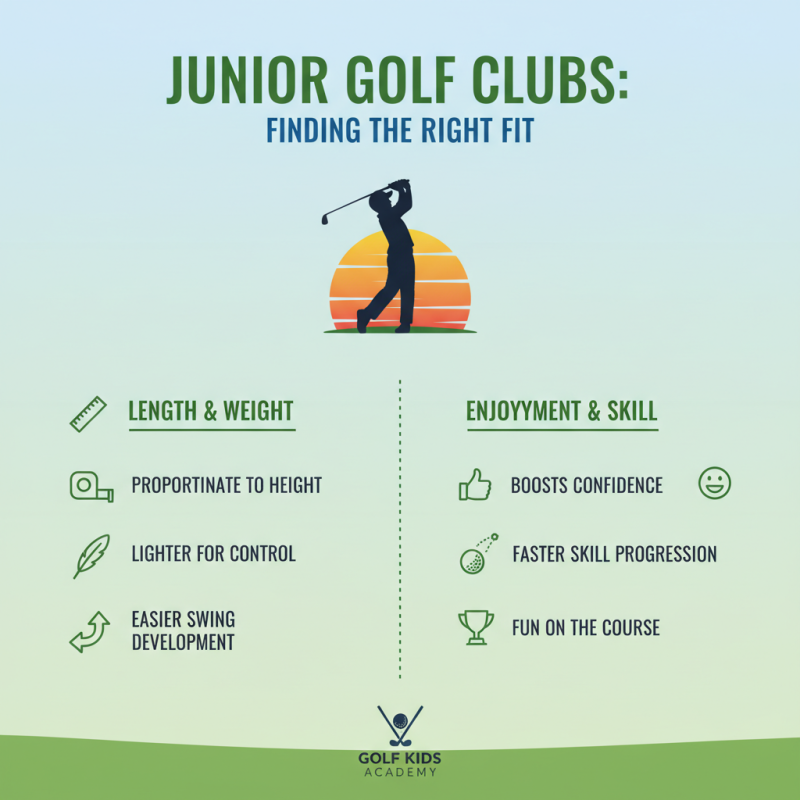
When selecting junior golf clubs for kids, there are several key features to consider to ensure they not only have the right equipment but also enjoy their golfing experience. The first aspect to focus on is the club length and weight. Junior clubs should be proportionate to a child's height and strength, allowing for better control and comfort. Lighter clubs enable young players to swing more freely and develop their skills without the frustration of cumbersome equipment.
Another important feature is the clubhead size and design. A larger clubface can provide a bigger sweet spot, making it easier for beginner golfers to make solid contact with the ball. Additionally, the materials used in the construction of the clubs can affect performance; for example, using materials that promote flexibility can help in generating more distance and accuracy. Lastly, consider the grip size, as having the correct grip will enhance a child's ability to hold the club properly, allowing them to focus more on their swing and technique rather than struggling with discomfort. By keeping these factors in mind, parents can help their children foster a love for golf and develop their skills effectively.
How to Measure Your Child for the Right Golf Club Length
When selecting the right junior golf clubs for your child, proper measurements are crucial to ensure an enjoyable and effective golfing experience. To determine the appropriate length of golf clubs, you will need to measure your child's height and wrist-to-floor length.
Start by having your child stand straight against a wall without shoes, and use a tape measure to record their height. This measurement provides a foundational guideline for club length.
Next, measuring the wrist-to-floor distance is essential. Have your child stand with their arms relaxed at their sides and measure from their wrist to the ground. This measurement accounts for their arm length and helps in selecting clubs that enable a comfortable swing. Combining both height and wrist-to-floor measurements allows you to find the optimal club length, ensuring that your child can grip and swing the clubs efficiently, fostering confidence and skill development in their golfing journey.
Types of Junior Golf Clubs: An Overview of Sets Available
When selecting junior golf clubs, it's essential to understand the various types available to ensure that young players are equipped with the right tools for their development. Junior golf clubs are generally categorized by age and height, allowing for optimal performance and comfort. According to the National Golf Foundation, nearly 2 million junior players participated in organized golf in recent years, highlighting the need for accessible and age-appropriate equipment.
One common type of junior golf club set includes a driver, fairway woods, irons, and a putter, specifically designed to suit the scale and strength of kids. These sets typically come in three distinct categories: beginner, intermediate, and advanced. Beginner sets, often made of lightweight materials, emphasize ease of use and forgiveness, helping new players build fundamental skills. Intermediate sets start incorporating more advanced technology to aid in distance and accuracy, while advanced sets cater to competitive young golfers, featuring clubs that closely mimic adult models in terms of construction and playability.
Additionally, adjustable golf clubs are becoming increasingly popular among parents looking for longevity in their investment. These clubs can grow with the child, offering a range of length adjustments that accommodate their height changes over time. The U.S. Golf Association recommends that juniors start with clubs that are appropriate for their skill level, as using mismatched equipment can hinder their development and enjoyment of the game. Ultimately, an informed choice in the type of junior golf clubs can greatly enhance a child's experience, fostering a lifelong love for the sport.
Types of Junior Golf Clubs: An Overview of Sets Available
Tips for Choosing the Best Golf Clubs Based on Skill Level
When selecting golf clubs for kids, it's essential to consider their skill level. Beginners usually benefit from a lighter set with oversized clubheads, which offer more forgiveness on mis-hits and help instill confidence. Clubs with shorter shafts can make it easier for young golfers to control their swings, allowing them to develop proper technique without feeling overwhelmed. It’s important to choose clubs that enable them to enjoy the game while learning the fundamentals.
As kids progress in their skills, transitioning to a more advanced set becomes crucial. Young players with a better understanding of their swing mechanics might benefit from clubs that offer more precision and control. Adjustable clubs can also be a great option as they can be customized to fit a child's changing ability and growth. Additionally, considering the material of the club—whether graphite for lighter weight or steel for durability—can play a significant role in performance and comfort. Ultimately, the right set of clubs should match the child’s current capabilities while encouraging growth and development in their golfing journey.