Top Junior Golf Clubs for Kids How to Choose the Right Set?

Choosing the right junior golf clubs is not a smaller version of choosing adult equipment. Children grow quickly, swing differently, and often lose confidence when a club feels heavy or awkward. A set that looks impressive may still be too long, too stiff, or difficult to control.

The participation opportunity is significant. The National Golf Foundation reported nearly 3.5 million juniors played golf on a course in the United States during 2023. The R&A’s Global Golf Participation Report 2023 also recorded 66.6 million adult golfers worldwide. These figures suggest a growing pathway, but participation alone does not guarantee enjoyment. Poorly fitted equipment can make a simple seven-yard chip feel frustrating.

Dan Van Horn, founder of U.S. Kids Golf, captures the central fitting principle: “Equipment should fit the child, not the child fit the equipment.” That idea should guide every buying decision. Check the child’s height, wrist-to-floor measurement, strength, and current skill level. Weight matters more than many parents expect. A child should swing freely, not drag the club through impact.

There is no perfect set for every young golfer. Some guidance remains subjective. Children also develop at different speeds. This article compares club length, weight, loft, grip size, set composition, and adjustability. It also considers real practice conditions, from a narrow backyard mat to a windy junior course. The best junior golf clubs should support better contact, safer movement, and continued curiosity. Overspending is not required. Fit is.

Top Junior Golf Clubs for Kids How to Choose the Right Set?

Understanding Junior Golf Club Types and Their Purpose

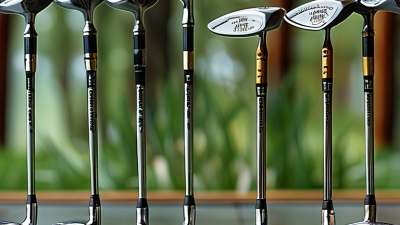
Junior golf clubs are not simply shorter adult clubs. Each type has a specific purpose. A driver or fairway wood helps a child launch the ball from the tee or fairway. Its broad head can build confidence, but excessive length may reduce control. A hybrid replaces difficult long irons and works well from rough or uneven lies. Junior irons support approach shots, while wedges help with chips, pitches, and bunker play. The putter develops distance control on the green.

According to the National Golf Foundation’s 2024 participation report, about 3.6 million U.S. children aged 6–17 played on-course golf in 2023. That growth makes proper equipment selection increasingly important. The R&A’s Golf Around the World 2023 report also recorded 66.6 million adult golfers globally, showing how equipment education supports long-term participation.

In practice, I check height, wrist-to-floor measurement, strength, and swing speed before choosing a set. Age alone is a weak guide.

Fit matters most.

A set should feel light enough for repeated swings, but not flimsy. Flexible shafts can help slower swings launch higher, while excessively soft shafts may scatter shots. Many parents choose oversized heads for forgiveness, yet larger is not always better. I have seen children struggle because the club was too long and heavy. A slightly shorter set may produce cleaner contact and more enjoyable practice. Rechecking the fit every six months is sensible because children grow quickly, and their swing changes with them.


Matching Club Length and Weight to a Child’s Age and Height

Choosing junior golf clubs should begin with height, not age. Age ranges are useful, but children grow unevenly. Measure the child in golf shoes from the floor to the wrist crease. A 48-inch child may need a shorter set than another eight-year-old. The National Golf Foundation reported about 3.4 million junior on-course golfers in the United States during 2023, showing how widely young players’ needs can differ. Use age charts only as a starting point.

Length affects posture and contact. A properly fitted club lets the child stand comfortably, keep the arms relaxed, and strike the ball near the clubface center. If the club feels too long, the child may choke down, bend excessively, or lose balance. That is not a small issue. A club that is too short can also force awkward posture. Recheck measurements every few months during rapid growth.

Weight matters just as much. The child should complete a smooth backswing without lifting the shoulders or collapsing the wrists. The R&A’s Golf Participation Report highlights the importance of enjoyable, accessible early experiences, and heavy equipment can quickly remove that enjoyment. Try several clubs and watch the swing, not just the distance. If contact improves with a lighter club, choose control over impressive specifications. I would still question rigid age-based charts; children do not grow to a schedule. A professional fitting can reveal small adjustments that a chart misses.

Choosing Suitable Materials, Flexibility, and Grip Size

Choosing junior golf clubs starts with materials, flexibility, and grip size, not colorful designs. The National Golf Foundation’s 2024 Golf Participation Report estimated about 3.5 million U.S. junior golfers aged 6–17 played on courses in 2023. That participation level makes proper fitting more important than ever.

Lightweight graphite shafts usually reduce total club weight and help children swing with less strain. Steel can offer durability, but it may feel heavy for smaller players. Flex should match swing speed and strength. A shaft that is too stiff can produce low, weak shots. An overly flexible shaft may feel unstable.

The USGA Equipment Rules do not require one specific shaft material for junior clubs. Fit matters more than the label.

Grip diameter deserves close attention. A child’s fingers should wrap comfortably around the grip without pressing deeply into the palm. If the grip is too thick, wrist movement becomes restricted. If it is too thin, the club may twist during impact. Measure the player’s hand, then test several sizes with a real swing.

The R&A’s 2023 Golf Participation Report also highlights growing youth involvement globally, although participation figures vary by country. I once assumed longer clubs would help a taller child, but control quickly disappeared. That mistake still matters: a slightly shorter club can encourage centered contact and confidence. Growth is uneven, so review the set every few months. Some children need a different flex before they need longer clubs.

Comparing Complete Sets, Individual Clubs, and Essential Components

Choosing junior golf equipment starts with the child, not the package. The National Golf Foundation’s 2024 participation report recorded about 3.6 million U.S. junior golfers in 2023. That growth makes proper fitting more important. A complete set offers consistent lengths, matching flex, and simpler buying. It suits beginners who need a driver, fairway wood, hybrid, irons, wedge, and putter. However, some sets include too many clubs. Extra weight can discourage a smaller player.

Individual clubs work better when needs are clear. A child may begin with a seven-iron, pitching wedge, and putter. These clubs encourage contact before distance. Add a lightweight driver later. The R&A’s Global Golf Participation Report 2023 found more than 60 million golfers outside the United States and Mexico. Participation is broad, but children develop at different speeds. Age labels alone are weak evidence. Measure height, wrist-to-floor distance, grip comfort, and swing control.

Essential components deserve close inspection. Look for flexible shafts, shorter lengths, lighter heads, and narrow grips. The club should rest naturally behind the ball. The child should not choke down several inches. That often signals poor sizing. A complete set may be economical, yet individual clubs can reduce waste during rapid growth. The imperfect choice is sometimes best. Recheck fit every six months, because a suitable set today may feel awkward by spring. Data guides the purchase, but observed balance and confidence matter more.

Checking Safety, Comfort, Skill Level, and Long-Term Value

Top Junior Golf Clubs for Kids: How to Choose the Right Set?

Safety and comfort should guide every junior club decision. The National Golf Foundation’s 2024 Golf Participation Report recorded 3.6 million U.S. golfers aged 6–17 on courses in 2023. More children are playing, but adult-sized equipment can create avoidable strain. Choose lightweight clubs with flexible shafts, secure grips, and smooth edges. A child should swing without lifting the shoulders or losing balance. The club should feel controlled, not impressive.

Skill level matters more than age alone. Beginners need shorter clubs, simple shapes, and a small set that supports basic swings. Stronger players may benefit from extra loft and slightly longer shafts. A fitting check is useful: the child should address the ball naturally, with relaxed arms and the club resting comfortably. Children grow unpredictably. That makes exact sizing imperfect. Recheck the fit every few months.

Long-term value comes from usable equipment, not the largest set. The Sports & Fitness Industry Association’s 2024 participation research continues to identify affordability as a major factor in youth sports access. Therefore, durable grips and replaceable components can matter more than decorative features. In practice, parents sometimes buy clubs with too much growing room. I understand the temptation, but poor control can reduce confidence. A modest set that fits today may support better learning and safer practice.

Top Junior Golf Clubs for Kids How to Choose the Right Set? - Checking Safety, Comfort, Skill Level, and Long-Term Value

Player Profile Typical Height Guide Recommended Club Length Shaft and Weight Preference Suitable Set Composition Safety and Comfort Checks Long-Term Value
Early Starter
Approx. ages 3–5
About 90–110 cm
35–43 in
Short junior length; the grip should reach comfortably without forcing the child to bend excessively. Very light graphite or lightweight composite shaft; flexible construction is generally easier for a small swing to load. 2–4 clubs: putter, short iron, and a lofted club. A smaller set reduces weight and distraction. Rounded head edges, secure grips, no loose parts, and a lightweight stand or carry bag. Always supervise use. Best value comes from comfort and regular use rather than a large number of clubs. Avoid buying an adult set to “grow into.”
Developing Beginner
Approx. ages 5–8
About 105–130 cm
41–51 in
Use a junior length matched to the child’s height; the club should sit naturally at address without an extreme upright posture. Lightweight shaft with a soft or junior flex; excessive weight can reduce swing speed and control. 4–6 clubs: putter, wedge, 7- or 8-iron, hybrid or wood, and optionally a second iron. Check grip diameter, club balance, head covers, and bag straps. The child should be able to carry the set without strain. A simple set with durable shafts and replaceable grips can remain useful through lessons and casual rounds.
Confident Junior
Approx. ages 8–11
About 120–145 cm
47–57 in
Choose length by measured height and wrist-to-floor distance rather than age alone; reassess fit at least once a year. Light to moderate weight with a junior or soft flex; a faster swinger may need a firmer junior shaft. 6–8 clubs: putter, wedges, mid-irons, hybrid or fairway wood, and a driver if the child has adequate control. Look for comfortable grips, stable clubheads, appropriate loft, and a bag that distributes weight evenly across the shoulders. Modular sets or clubs available in multiple size steps may reduce replacement costs as height and skill increase.
Advanced Junior
Approx. ages 11–14
About 135–165 cm
53–65 in
Some players may transition toward shorter adult lengths, but fitting should be based on posture, control, and swing mechanics. Select flex and total weight according to swing speed and tempo; heavier is not automatically better. 8–10 clubs may provide useful yardage coverage without requiring a full 14-club set. Confirm that the child can control every club, maintain balance, and carry the bag safely for the intended playing time. Prioritize fitting adjustability, durable faces, and replaceable grips over cosmetic features or unnecessary club quantity.
Fast-Growing Junior
Any age or height range
Use current measured height; age-based sizing can be inaccurate during growth spurts. Never choose clubs so long that the child must choke down or alter posture significantly to use them. Maintain manageable swing weight and grip size; a club that is too heavy may encourage poor technique and fatigue. A smaller core set is often more practical than a complete set until growth becomes steadier. Inspect clubs regularly for bent shafts, cracked heads, worn grips, and damaged ferrules; replace damaged equipment promptly. Buying used clubs in good condition or choosing a size-transition program can lower total ownership cost, provided the fit is correct.
Fit reminder: Height ranges are general starting points, not strict standards. A qualified coach or club fitter should confirm length, lie, grip size, shaft flex, and swing weight. Children should use clubs in a safe practice area and be supervised around other players.