
Choosing the right Banner Stands is a practical decision about visibility, transport, and repeated use. A polished graphic means little if the frame wobbles beside a busy aisle. The best choice must fit your floor space, message, budget, and staffing reality.
Industry evidence supports this careful approach. UFI’s 2024 Global Exhibition Barometer shows continuing confidence in face-to-face exhibitions and ongoing investment in event participation. CEIR’s research on the role and value of face-to-face marketing also emphasizes the importance of direct conversations during exhibitions. These findings suggest that display hardware is not merely decoration. It supports attention, approachability, and brand recall. A compact retractable stand may suit a hotel lobby or a narrow conference booth. A wider tension system may work better behind a demonstration table. Outdoor events demand stronger bases, weather-resistant materials, and safer anchoring. Small details matter.
There is no universal winner.
The right Banner Stands should also reflect real operating conditions. Can one person assemble them in five minutes? Will the printed panel remain sharp under strong venue lighting? Can the graphic be replaced without buying a new frame? These questions often matter more than a low purchase price. Freeman’s recent event trend research highlights the growing value of purposeful, experience-led environments, yet a fashionable design can still underperform. I have seen attractive displays become expensive storage after one event. That is the uncomfortable lesson. Compare dimensions, materials, warranty terms, replacement graphics, and total ownership cost before committing. A reliable stand is not always the most impressive one; it is the one your team will repeatedly use well.
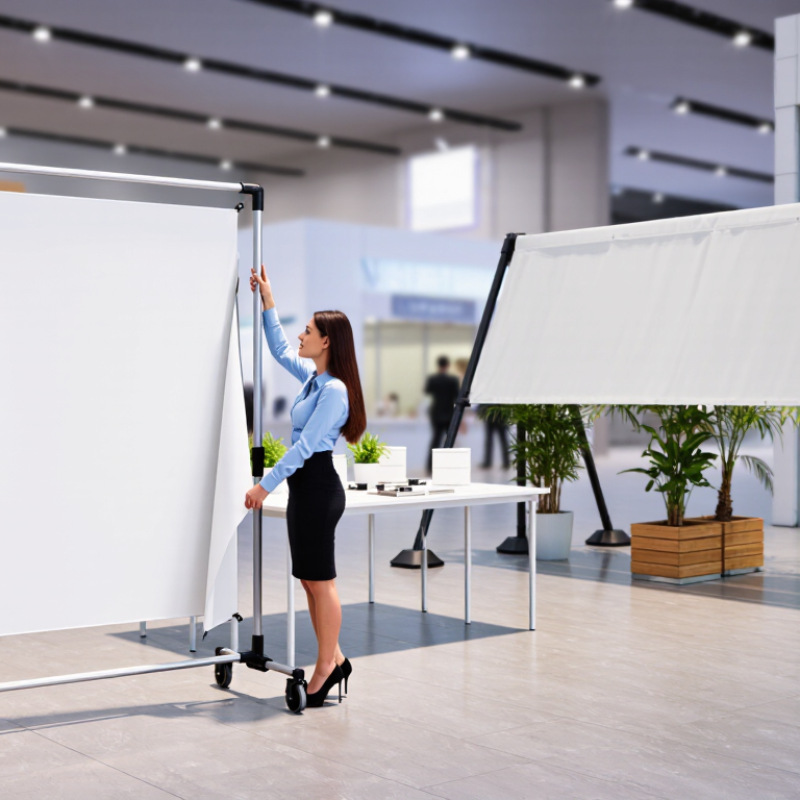
Business goals should determine your banner stand requirements, not attractive graphics alone. For awareness campaigns, choose a wide, high-contrast display that remains readable from several metres away. The 2024 UFI Global Exhibition Barometer reports continued growth in exhibition participation, increasing competition for visitor attention. Your message must work quickly. Very quickly.
Lead generation requires a different setup. Select a stand with a clear headline, one strong offer, and a visible QR code. CEIR research on exhibitor performance consistently identifies lead quality and conversion as major exhibition objectives. Place the call to action near eye level, not at the bottom edge. Test the code before every event. A beautiful display cannot repair a weak follow-up process.
For retail promotions or mobile sales teams, portability may matter more than maximum size. Choose a lightweight frame, a padded case, and graphics that resist repeated handling. I once selected a larger stand for a busy event, but transport delays reduced its value. That mistake changed my checklist. According to the 2023 Freeman Trends Report, attendees place strong value on meaningful in-person interactions, so the stand should support conversation rather than block it. Measure results through scans, qualified contacts, appointments, and reuse across campaigns. Thresholds may need revision.
How to Choose the Best Banner Stands for Your Business?
Banner stand types create different practical results. A retractable stand packs quickly and suits hotel lobbies, sales visits, and repeated indoor use. Its spring mechanism saves setup time, but damaged graphics can become difficult to replace. A telescopic stand offers adjustable height and width. This flexibility helps when displays must fit different spaces. However, adjustment takes longer and may look less polished without careful tensioning.
Tension fabric stands create a smooth, continuous graphic wall. They work well behind counters or interview areas, where photographs may be taken. Modular frames provide stronger visual structure and allow future expansion. They also require more parts, storage space, and staff training. The Center for Exhibition Industry Research reported in its 2023 study that exhibitors use face-to-face events to build relationships and generate leads. That makes visibility important, but visibility alone is not enough. A 2024 UFI Global Exhibition Barometer report also showed continued growth expectations for exhibitions, increasing pressure on businesses to improve booth presentation. In practice, choose based on transport, setup frequency, viewing distance, and floor conditions. I have seen teams select the largest stand, then struggle with narrow elevators. Bigger is not always better. Check replacement graphics, frame weight, lighting needs, and wind stability before ordering. The data supports investment, but it cannot replace a real venue test.
Banner stand types differ mainly in setup speed, portability, visual impact, and suitability for repeated use. The chart compares typical setup times for common banner stand formats.
Practical takeaway: Roll-up stands are usually the fastest to deploy, while pop-up and tension fabric systems generally require more assembly but provide a larger and more seamless display area. X-banner stands are lightweight and economical for short-term indoor promotions.
Material affects appearance, stability, and repeated-use costs. Aluminum frames are light and resist corrosion, while fiberglass poles flex during transport. Fabric graphics reduce glare under exhibition lighting and usually fold into a smaller case. Vinyl can look sharper for high-contrast text, but it often feels heavier. Ask for fire-safety documentation when venues require it. Do not assume a thicker graphic is always better.
Size must match viewing distance and floor space. A 24-inch-wide stand suits narrow counters or small retail entrances. A 33-inch model offers stronger visibility without demanding much room. Heights near 60 to 90 inches usually place key messages near eye level. Keep essential information above crowded tables. CEIR reports that 81% of business-to-business exhibition attendees influence purchasing decisions, so readable messaging deserves serious testing.
Portability is more than total weight. Check the packed length, case handles, assembly time, and replacement parts. I prefer tool-free systems after seeing screws disappear on busy setup days. That preference is practical, not scientific. A compact stand may sacrifice some stability in open areas. Test it beside a doorway and under airflow before committing. Measure twice. Compare the complete kit, not only the frame. Industry surveys from the Center for Exhibition Industry Research also support face-to-face selling, but a poorly packed display can weaken that valuable first contact.
How to Choose the Best Banner Stands for Your Business?
A banner stand should support your branding, not compete with it. Choose colors that match your existing materials, then limit the design to one clear message. Large lettering helps visitors understand your offer from several meters away. Keep the logo visible, but do not let it dominate the entire banner. A practical lesson from event setups is simple: attractive graphics can still fail when the message is too small. Review the design from a distance before ordering.
Tips: Match the stand size to the display location. A narrow model suits crowded aisles, while a wider stand works near entrances or open walls. Check ceiling height, floor space, lighting, and nearby signs. Avoid placing the banner behind tables or beside visual clutter. Walk through the area from your audience’s direction. Can people see it quickly? If not, change the angle, height, or position.
Audience visibility also depends on movement. Visitors walking quickly need fewer words and stronger contrast. Visitors waiting at a counter may notice helpful details, such as services, prices, or contact information. Consider glare from windows and shadows from overhead fixtures. Test the stand during the busiest period, not only in a quiet room. It may look balanced in theory, but real traffic can block half the design. Leave enough space around it for people to stop safely without interrupting others.
| Banner Stand Type | Best Display Location | Branding Impact (1–5) | Audience Visibility (1–5) | Portability (1–5) | Branding and Design Considerations | Recommended Audience and Use Case |
|---|---|---|---|---|---|---|
| Retractable Banner Stand | Trade-show booths, reception areas, retail entrances, indoor events | 5 | 4 | 5 | Clean single-message layout High-quality product imagery Strong headline at eye level | Businesses needing fast setup, repeated indoor use, and consistent presentation across multiple events. |
| Fabric Pop-Up Display | Large exhibition booths, conference halls, showrooms, indoor presentations | 5 | 5 | 3 | Large graphic area Seamless visual background Consistent color system | Organizations that require a high-impact branded environment and have sufficient transport or storage capacity. |
| Step-and-Repeat Backdrop | Press walls, award ceremonies, photo areas, product launches, media events | 5 | 4 | 3 | Repeated logo pattern Photo-friendly contrast Clear sponsor spacing | Event organizers and businesses seeking repeated brand exposure in photographs and social media content. |
| Outdoor Feather Flag | Storefronts, outdoor entrances, festivals, sports venues, roadside promotions | 3 | 5 | 4 | Short vertical message Bold contrast Weather-resistant material | Businesses attracting pedestrians or passing traffic where movement and height help draw attention from a distance. |
| Outdoor A-Frame Banner | Sidewalks, pedestrian zones, café entrances, parking areas, temporary promotions | 3 | 4 | 4 | Two-sided messaging Readable from both directions Weighted base recommended | Local businesses that need direct, near-range communication with pedestrians and nearby customers. |
| Telescopic Banner Stand | Indoor and sheltered outdoor events, temporary sales areas, demonstrations | 4 | 3 | 4 | Adjustable height Flexible graphic formats Useful for changing campaigns | Teams that regularly update campaign messages or need adaptable dimensions for different venues. |
| Hanging Banner | Exhibition halls, atriums, large retail spaces, high-ceiling venues | 4 | 5 | 2 | High-position visibility Large-scale graphics Venue approval required | Businesses competing for attention in crowded venues where elevated signage can be seen over other displays. |
| Countertop Banner Stand | Registration desks, reception counters, checkout areas, information tables | 3 | 2 | 5 | Compact logo placement Short call to action Close-range readability | Businesses communicating detailed instructions, QR codes, offers, or sign-up information at close range. |
| Double-Sided Banner Stand | Walkways, aisle intersections, open entrances, two-directional traffic areas | 4 | 5 | 3 | Different messages per side Maximum traffic coverage Stable base essential | Businesses serving audiences approaching from opposite directions or needing separate messages for different visitor groups. |
Scoring guide: 1 = limited suitability and 5 = excellent suitability. Ratings reflect typical indoor or outdoor use conditions, graphic area, viewing distance, setup requirements, and expected audience movement. Outdoor displays should be selected with appropriate bases, anchoring, and weather-resistant materials.
Budget should include more than the purchase price. Add replacement graphics, transport, storage, and staff time. CEIR reports that 81% of trade show attendees influence buying decisions. A damaged stand can therefore weaken a valuable sales opportunity. Set a realistic cost per event, not just a low checkout price. A basic retractable stand may suit occasional indoor use. Frequent exhibitors need stronger hardware and replaceable graphics.
Durability depends on daily handling. Look for reinforced bases, stable feet, smooth rollers, and scratch-resistant graphic materials. Aluminum frames usually reduce carrying weight. However, very light hardware can feel unstable in busy aisles. I have seen teams choose the cheapest option, then pay more for repairs and urgent reprints. That mistake is easy to repeat. Check the packed size before ordering. A stand that fits under a seat or inside a small case simplifies every event.
Setup needs deserve equal attention. UFI’s Global Exhibition Barometer consistently tracks strong demand for face-to-face exhibitions, where fast installation can improve staff productivity. Choose tool-free assembly when several people share setup duties. Test the stand before its first public use. Measure setup time with one person, then with two. If the graphic curls, gaps, or reflects harsh lighting, reconsider the design. A polished display should survive real floors, rushed mornings, and imperfect handling.
Presidio Golf Course
300 Finley Road @ Arguello Gate
San Francisco 94129
P: 415.561.4661
MAP IT