Who Makes the Best Golf Bags in China?
Who makes the best golf bags in China? The answer depends on what the bag must do: survive frequent travel, stay light on a walking course, or carry a full set through wet weather. China has a large sporting-goods manufacturing base, but a country of origin alone cannot prove quality. Buyers should compare individual factories, materials, construction, and quality-control practices.
Industry reports offer useful context, not a ready-made ranking. The R&A’s Golf Around the World 2023 report tracks golf participation and facilities across markets. The National Golf Foundation reported 26.6 million on-course golfers in the United States in 2023, a reminder of the scale of one major golf market. That figure is not China-specific. It does, however, help explain why dependable equipment matters to golfers and retailers. Details count. On a sample bag, inspect the zipper tracks, reinforced seams, stand legs, strap padding, and the way the base sits on uneven ground. Ask manufacturers how they test those parts, and whether they can document material specifications and inspection procedures. A polished showroom sample can still conceal weak stitching or inconsistent production. That is easy to miss. There is no universally proven “best golf bags” maker without comparable, independent testing. A careful comparison should weigh product performance, production consistency, communication, and the needs of the intended golfer.
How Golf Bags Are Designed and Manufactured in China
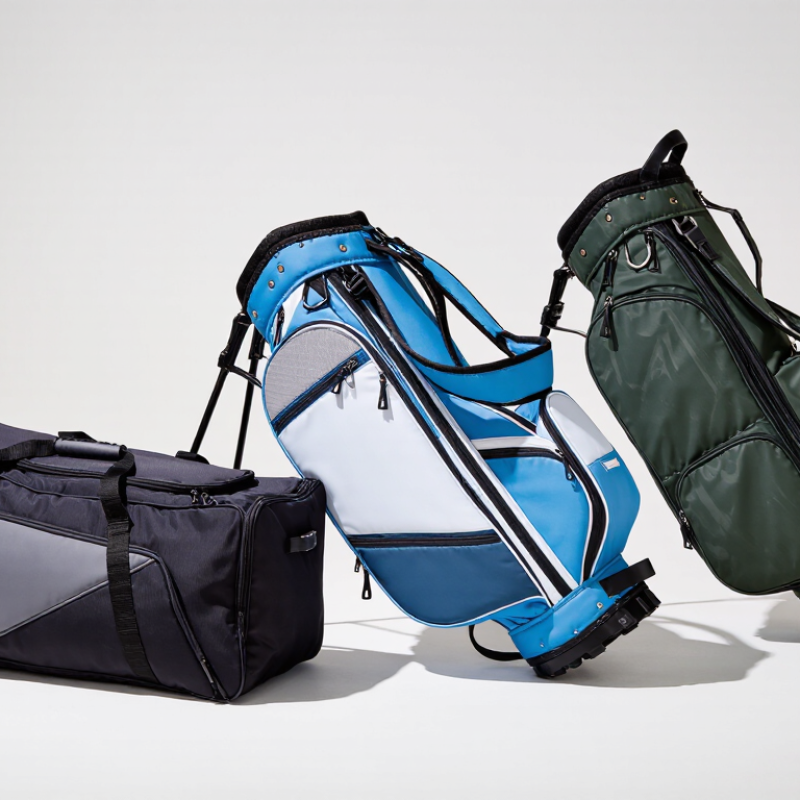
Designing a golf bag in China usually starts with a practical brief: carry or cart use, club capacity, target weight, and weather protection. Pattern makers turn that brief into panels, pockets, and divider layouts. A first sample tests how clubs sit, whether zippers clear the stand legs, and how the bag balances when lifted. Small details matter.
Material choices shape the build. Polyester and nylon fabrics offer different weights, textures, and abrasion resistance; foam padding protects club heads, while reinforced stitching helps at handles and shoulder straps. Factories typically cut panels, sew compartments, fit hardware, and inspect finished samples. The R&A’s 2024 Global Golf Participation Report counted 108 million on-course and off-course golfers across 146 countries, a broad demand base for varied bag designs. UNIDO’s International Yearbook of Industrial Statistics 2024 puts China’s share of global manufacturing value added at about 31% in 2022.
Quality checks should go beyond appearance. A bag may look tidy yet twist under a full set of clubs, or leak through a poorly sealed seam. That is easy to miss. Teams can test loaded weight, strap comfort, pocket access, and rain-cover fit before approving production. Still, a showroom sample cannot reveal every issue from repeated use. That limitation deserves honest attention during design reviews.
Key Criteria for Evaluating Chinese Golf Bag Makers
A strong Chinese golf bag maker should prove performance, not just show polished samples.
Ask for the bag’s finished weight, fabric specification, stitch details, and test records. Then inspect a loaded sample: do the legs lock on uneven ground? Does the strap stay comfortable after a long walk? Check zipper movement, pocket access, and whether seams pucker near stress points. Small details matter. Request documented tests for seam strength, abrasion, water resistance, and stand stability, with sample sizes and pass criteria. A single successful prototype is not enough.
Material traceability also deserves attention.
Textile Exchange’s Materials Market Report 2024 estimates global fiber production reached 124 million tonnes in 2023, with polyester accounting for 57%. That broad industry figure is not golf-bag-specific, but it makes clear why buyers should verify fiber content and recycled-material claims rather than rely on labels alone. Ask how incoming fabric lots are checked and whether production batches can be traced. The R&A’s 2023 Global Golf Participation Report estimated 108 million golfers across 146 countries, a reminder that bags may face varied climates and usage patterns. I would still question any supplier promising every detail without qualification; factory capacity, inspection records, and realistic lead times matter as much as a convincing sample.
Leading Golf Bag Manufacturers and Their Specialties
China’s golf-bag manufacturers often specialize by construction type rather than making every style equally well. Some focus on lightweight stand bags, where balanced weight, smooth leg deployment, and reinforced feet matter. Others concentrate on cart bags, adding stable bases, accessible pockets, and dividers that keep clubs from knocking together. Waterproof models call for careful seam sealing and coated fabrics. That detail is easy to overlook.
A manufacturer’s specialty is a useful starting point, not proof of consistent quality. Ask for a sample and inspect the stitching around strap anchors, pocket corners, and stand hinges. Open every zipper. Check whether a loaded bag stays upright and whether the rain hood fits without pulling at the seams. Factories with custom-production experience may also support material selection, color matching, and small design adjustments. Still, a polished sample does not guarantee every production unit will match it. Buyers should clarify inspection standards and confirm which components are made in-house.
Tips: Match the factory’s strongest category to your intended use. Request material and load-test details, then compare them with a physical sample. If a specification seems vague, ask for a clearer measurement. A little extra checking helps.
Comparing Quality, Customization, and Production Capabilities
Who Makes the Best Golf Bags in China?
The best choice depends on verified quality, useful customization, and reliable output—not a factory’s catalogue alone. The R&A’s 2023 Global Golf Participation Report estimates that about 108 million people participated in golf across 146 countries and territories. That scale supports demand for varied equipment, but it does not identify the best manufacturer. Inspect stitching, zipper action, stand stability, and fabric wear. Small details matter.
Ask suppliers for material specifications, production capacity, lead times, and documented quality checks. For customization, confirm logo placement, pocket layout, color matching, and sample approval before ordering. Request a pre-production sample and compare it with finished units. A polished sample can still disappoint in bulk; that risk is easy to overlook. Factory capacity also needs context: monthly output means little if inspection standards or delivery schedules are unclear.
Tips: Send a written specification sheet and test a loaded bag for balance, strap comfort, and access to pockets. Ask for recent inspection records, then verify key points independently. If a supplier cannot explain how defects are recorded and corrected, keep looking.
How to Choose a Chinese Golf Bag Manufacturer for Your Needs
Who Makes the Best Golf Bags in China?
Choosing a Chinese golf bag manufacturer starts with your exact use case. A lightweight carry bag needs different support from a cart bag built for frequent travel. Share a clear specification: bag dimensions, pocket layout, fabric weight, zipper type, strap padding, and target order quantity. Ask whether the company makes products in its own factory or coordinates production elsewhere. Request recent photos of the workshop and a written quality-control process. Details matter.
A sample can reveal more than a polished catalogue. Check that the stand opens smoothly, seams stay even around pocket corners, and zippers move without catching. Fill the bag with clubs and walk with it; empty samples can hide awkward weight balance. Small things count. Ask for a quote that separates sample charges, tooling, packaging, and shipping, and confirm the expected production timeline in writing. Compare like with like, not just the unit price. I would leave room for one revision, because early samples rarely get every pocket right. Notice how quickly the supplier answers specific questions, too. Clear replies are useful, though they do not replace inspection.